
What is a website for? Winning clients, if it is built well
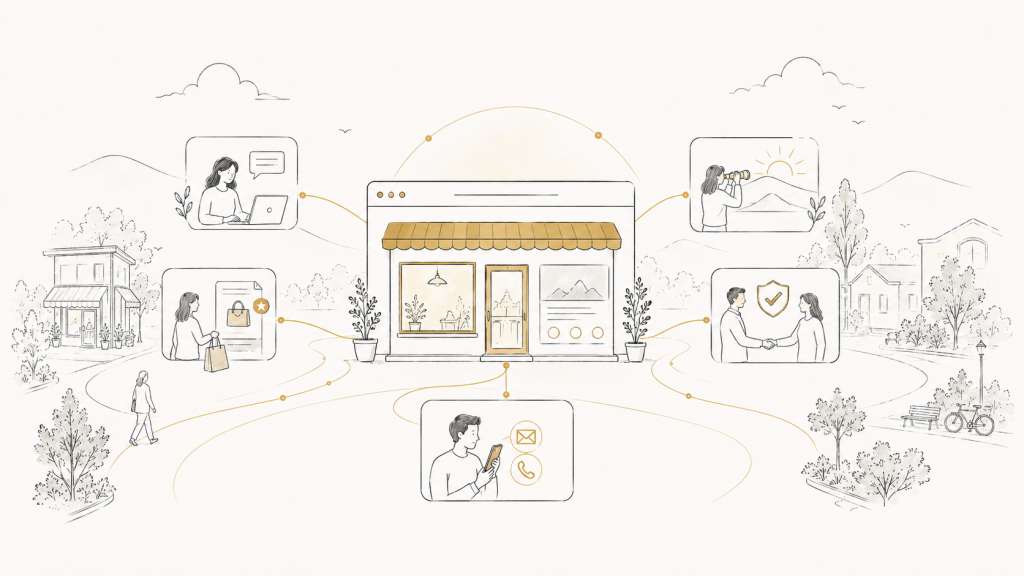
A website is not there just to give you an online presence. It helps people find you, trust you and contact you — a salesperson working 24/7 without a salary. But only if it is designed to convert. I explain what it is really for and, below, you can calculate how much yours could bring in.
A website is there to attract clients: to help people find you on Google, build trust with those who do not know you, and turn that attention into enquiries and sales, around the clock. It is the only channel that is 100% yours. However, a website is only useful if it is designed to get visitors to do something; a pretty brochure website that does not convert is no use. The difference lies in strategy, not design.
The question "what is it for?" almost always hides another: will it pay off for me? Let's answer that with numbers: yours. Adjust the values and see the estimated return from a website that converts:
How much could a website bring you?
Adjust the figures to your situation. The return is calculated instantly.
Indicative estimate. Assumes you close ~1 in every 3 people who contact you.
What it is really for (beyond an online presence)
Many people build a website because "you have to have one". That is like opening a shop without a window display or a sign. A website is there to work for you: when someone searches for what you offer, they find you; when they wonder whether you are trustworthy, your website convinces them; and when they are ready, it makes contacting you or buying easy. All while you sleep or serve another client. That is its real purpose.
What a good website does for your business
- Makes you findable on Google when people search for what you offer.
- Builds trust: someone who does not know you will judge your professionalism on your website before anywhere else.
- Converts: it turns curious visitors into enquiries, and enquiries into clients.
- Sells 24/7: it does not close, get ill or take Sundays off.
- Gives you independence: it belongs to you, unlike your social media account, which belongs to someone else.
When a website is NO use at all
Let's be honest: some websites are no use at all, and they are more common than you might think. The ones that are pretty brochures without a clear objective, where it is hard to understand what you offer, contacting you is difficult, and nobody finds them because no work has gone into SEO. Those websites cost money and give nothing back. A website is useful because it is designed to convert, not simply because it exists. If you are going to build one, make it the useful kind.
A clear example of a useless website is the attractive digital brochure with no objective: it does not say what you want visitors to do, getting in touch is difficult, and nobody measures anything. That is expensive decoration. A website works when it has one objective — getting people to call, book or buy — makes it easy, and is measured so it can keep improving.
So, does it pay off?
That depends on the numbers you enter in the calculator above, but the logic is simple: you pay for a website once, plus a little maintenance, and if it converts, it brings you clients every month for years. A few clients a year can be enough for it to pay for itself. The mistake is not spending money on a website; it is spending it on one that does not convert. That is why how it is built matters more than how much it costs.
I will build you a website designed to convert, rather than a brochure: clear, fast and designed to get visitors to take action. With foundational SEO so people can find you too. No lock-in.
Tell me about your projectFrequently asked questions
Is having a website profitable?
Yes, if it converts. You pay for it once and, when it is built well, it brings you clients every month for years. Attracting just a few clients a year will usually more than cover its cost. The key is not the website's price, but whether it is designed to turn visits into clients.
Does a website sell on its own?
Not by magic. People need to find it through SEO or advertising, and it must be designed to convert. What it does do, once it is up and running, is work without stopping: attracting and convincing people 24/7 without you having to be there.
Is a website useful if I already have social media?
Yes, because they serve different purposes. Social media helps people discover you; your website is where those people become clients and where you are not dependent on another platform's rules. Ideally, you combine them rather than choose one.
Will any website do?
No. A brochure website without a strategy, where people cannot understand what you offer or how to contact you and nobody finds it, is no use. A website designed to convert and built to rank is useful. The difference is enormous.
How long until I see a return?
If you attract traffic through advertising, almost immediately; with SEO, after a few months. In return, SEO delivers a cheaper and more lasting return. In both cases, a website that converts pays for itself with a few clients.
I am Rubén Romay, a marketing and web design consultant in Mallorca. I build websites designed to attract clients and measure results, rather than decorate the internet. I will tell you what yours needs to pay off.
Chat on WhatsApp